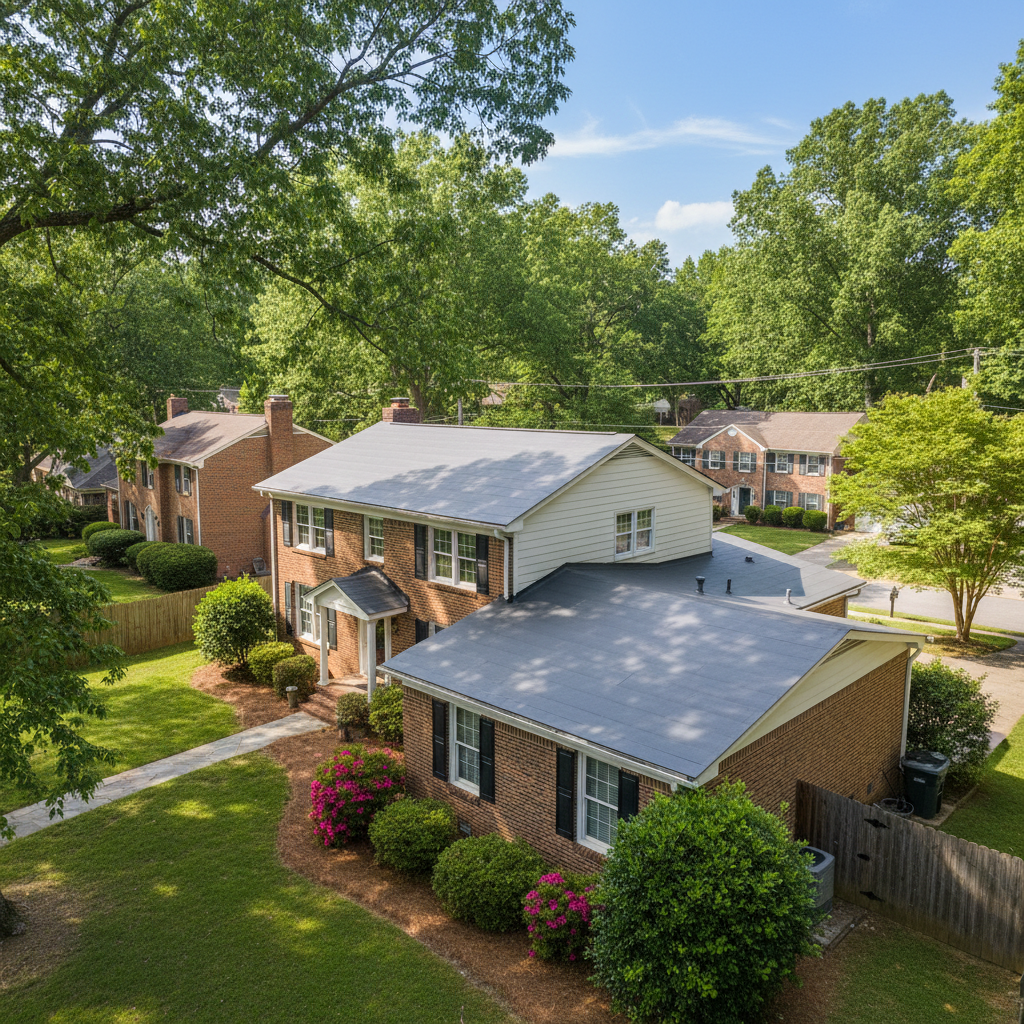
Flat Roofing in Chapel Hill: More Common Than You Think
When you hear the words "flat roof," you probably picture a big commercial building. You might also think of some modern design you saw in a magazine. Let me tell you that flat roofs, or what we call low-slope roofs, are becoming more common on homes right here in Chapel Hill. We are talking about porches, dormers, and additions. We are also talking about entire modern residential designs. Just because they are gaining popularity does not mean they are simple. Getting a flat roof right in Chapel Hill takes a different kind of expertise than your typical pitched roof.
It Is Not Really "Flat" – And That Is Key
First, we need to clear something up. No flat roof is truly flat. If it were truly flat, water would just sit there. This would cause many problems. A proper flat roof actually has a very subtle slope. This slope is usually between 1/4 to 1/2 inch per foot. This makes sure water drains off the roof. This slight pitch is important for drainage. This is especially true with the heavy rainstorms we get here in Chapel Hill.
Local Conditions Demand Specific Solutions
Our climate in Chapel Hill is serious. We get intense summer heat. This heat can really bake a roof. We then get heavy rains. We also get occasional winter ice. In addition, we experience humidity cycling in Orange County. These big swings can cause moisture to move through your roof system. Standard installations often cannot handle this. This can lead to hidden structural issues. This kind of weather puts a lot of stress on any roof. It puts even more stress on a flat roof.
One of the biggest challenges with flat roofs is managing water. If that slight slope is not perfectly executed, you will have problems. If the drainage system is not good enough, you will end up with standing water. This is also known as ponding. Ponding water is a flat roof's worst enemy. It can lead to algae as well as mold as well as leaks. It can also shorten the lifespan of your flat roof. We have Piedmont clay soil around here. This soil is slow to drain. Proper roof drainage is absolutely important. This drainage needs to tie into your property's overall landscaping and drainage plan. You do not want roof runoff just dumping water right next to your foundation. This is especially true when our local soil does not absorb water well.
Common Flat Roofing Materials We See Around Here
When it comes to materials for residential flat roofs, you have a few main players. Chapel Hill Roofing Solutions often works with these materials:
- TPO (Thermoplastic Polyolefin): This is a popular single-ply membrane. It is durable. It is often reflective. This helps with those hot Chapel Hill summers. TPO can last 15-25 years.
- EPDM (Ethylene Propylene Diene Monomer): This is often called "rubber roofing." EPDM is another single-ply option. It is known for its durability. It can also last a good 15-25 years.
- Modified Bitumen: This is an asphalt-based product. It is often installed in rolls. It is a bit more traditional than TPO or EPDM. Modified Bitumen can last 15-30 years.
- PVC (Polyvinyl Chloride): This is another single-ply membrane. PVC is durable. It is also fire-resistant. It is good for UV rays. It is easy to maintain. PVC can last up to 30 years.
Each of these materials has its pros and its cons. The best choice really depends on the specific section of your roof. It also depends on how much sun it gets as well as your budget. Sometimes, we even use tapered insulation systems. We do this to improve drainage on existing roofs that do not have enough slope.
Why Local Expertise Is Not Just a Buzzword
You might think a roof is just a roof. That is not true, especially with flat roofs in a place like Chapel Hill. Here is why local knowledge makes all the difference:
- Understanding Local Building Codes: The North Carolina Building Code has specific requirements for low-slope roofs. Chapel Hill follows this code. Materials approved for steep-slope roofs, like standard shingles, are not code-compliant on low-slope surfaces. In addition, residential re-roofing permit requirements are set at the local level. You need to make sure your project meets those requirements. We are up to date on all of that. You do not have to worry about it.
- Dealing with Our Unique Weather: We have seen firsthand how the intense heat, humidity, and sudden downpours affect different flat roofing materials over time. We know which systems hold up best against ponding water. We also know which systems hold up best against UV degradation in our specific climate.
- Drainage, Drainage, Drainage: We cannot stress this enough. We have clay soil in Chapel Hill. Getting the drainage right on a flat roof is very important. We design and install systems that effectively move water away from your home. These systems also move water away from your foundation. We often integrate with existing landscape drainage. We also suggest improvements.
- Knowing the Neighborhoods: You might be in an older part of town with historic charm. You might also be in a newer development with modern architecture. We understand the common construction styles. We also understand the challenges. For example, the Town of Chapel Hill's design guidelines mention that "large, flat-roofed areas viewable from the street are unacceptable" in some contexts. They also say that roof designs should minimize the visual impact of rooftop equipment. We keep these aesthetic and regulatory considerations in mind.
- Permitting and Inspections: Any significant roofing work will likely require permits. This is especially true for a flat roof. We handle the paperwork. We make sure the right materials are specified. We also make sure that inspections are scheduled and passed. The underlayment inspection is important before the final materials go down.
At Chapel Hill Roofing Solutions, we do not just put a roof on your house. We install a system. This system is designed to protect your home specifically from what Chapel Hill weather throws at it. If you have a flat roof, or are thinking about adding one, give us a call. We will make sure it is done right. We will do it right the first time.