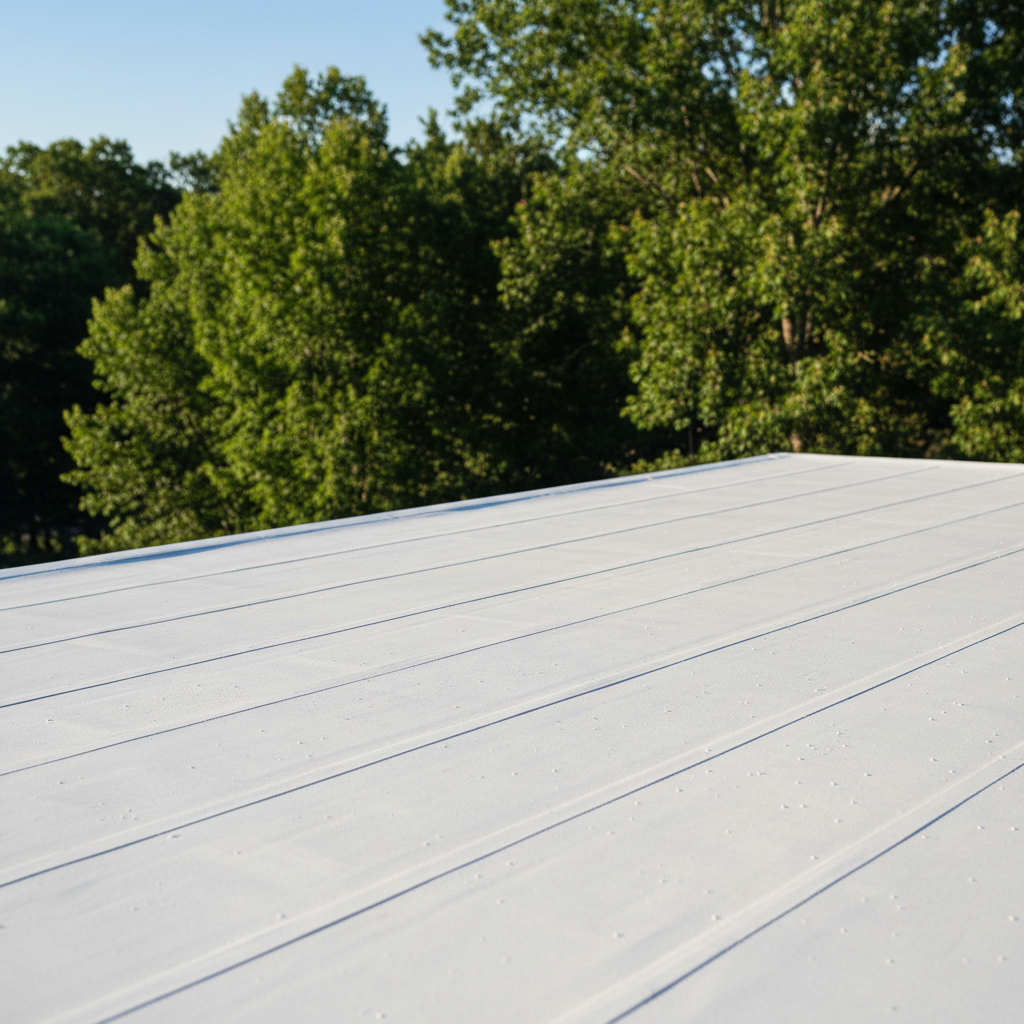
If you own a commercial building around Franklin Street or manage a property tucked into one of our older office parks off University Drive, you have probably stared up at your flat roof wondering what is actually keeping the rain out. Thermoplastic Polyolefin, which everyone just calls TPO, has become the standard single-ply membrane for flat and low-slope roofs in our area. But property owners always have plenty of questions before committing to a TPO Roofing installation or repair. Chapel Hill Roofing Solutions can walk through the most common things people ask about commercial TPO Roofing right here in Chapel Hill.
How long does a TPO roof actually last in our climate?
You can realistically expect a quality TPO roof to last between 20 and 30 years. But installation quality and routine maintenance dictate whether you hit the upper end of that range. Down here in North Carolina, our summers get very hot, and that UV radiation beats down on commercial roofs day after day. TPO Roofing is naturally reflective, which helps bounce that heat away, but the thermal shock from a sudden summer thunderstorm rolling over the Piedmont can test the seams. If it is installed right with proper insulation underneath, TPO Roofing holds up remarkably well in the Chapel Hill climate.
Why is TPO so popular for Chapel Hill commercial buildings?
It mostly comes down to energy efficiency and cost. That white, reflective surface does a fantastic job of keeping the building cooler, which translates to lower air conditioning bills during those sticky July and August afternoons. Compared to older built-up asphalt roofs, TPO Roofing is lighter, faster to install, and heat-welded at the seams. Those heat-welded seams actually become stronger than the membrane itself, creating a solid barrier against leaks when executed by an experienced crew from Chapel Hill Roofing Solutions.
Can a damaged TPO roof be repaired, or does it need full replacement?
Most of the time, local damage can be patched. If a tree limb drops onto your roof during a heavy windstorm or an HVAC contractor accidentally punctures the membrane, you do not necessarily need a whole new roof. Chapel Hill Roofing Solutions can clean the surrounding area, prep the membrane, and heat-weld a TPO patch right over the spot. Things get tricky only if the insulation underneath has soaked up water or the membrane has degraded past its useful life from extreme age. Chapel Hill Roofing Solutions handles TPO Roofing repairs all the time where a targeted fix buys a building owner another five to ten years.
How do I know if my TPO roof is failing?
Leaks are the obvious sign, but waiting for water to drip onto your drop ceiling is a risky strategy. Walk your roof or have someone check it twice a year for:
- Seams that are starting to pull apart or peel back
- Standing water, also known as ponding, that does not drain within 48 hours after a rain
- Punctures or cracks around rooftop units like HVAC systems or exhaust fans
- Discoloration or brittleness in the membrane itself
Catching these issues early keeps TPO Roofing repair costs low and prevents interior damage to your inventory or office space.
How much maintenance does a commercial TPO roof need?
TPO Roofing is relatively low-maintenance, but it is not maintenance-free. Chapel Hill Roofing Solutions tells every building owner to schedule inspections twice a year, once in the spring after Chapel Hill heavy pollen season, and once in the late fall after the leaves drop. Clogged drains and scuppers will cause water to pool, which stresses the seams over time. Keeping the surface clean of debris and checking the caulking around penetrations will double the lifespan of your roof in Chapel Hill.
Is TPO energy efficient enough to lower my utility bills?
Yes. The standard white TPO membrane meets ENERGY STAR requirements and complies with strict energy codes. By reflecting solar radiation rather than absorbing it, your HVAC units do not have to work nearly as hard to keep the building comfortable. For commercial properties in Chapel Hill, NC, Chapel Hill Roofing Solutions provides TPO Roofing services that add real value and efficiency to local buildings.