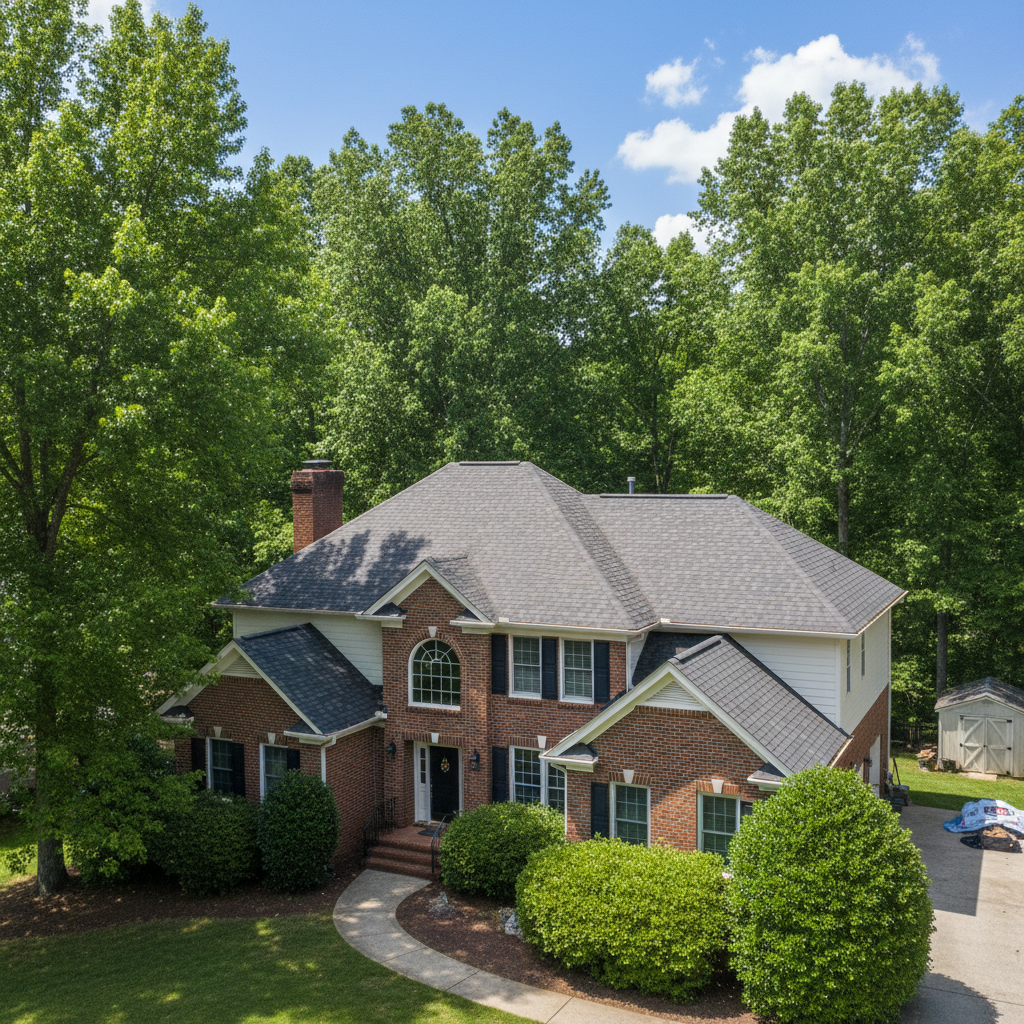
Running a local contracting business means I spend a lot of time on roofs across Chapel Hill, and I see firsthand what our Piedmont climate does to asphalt shingles. Between the intense summer humidity, sudden afternoon thunderstorms, and heavy pollen coatings in the spring, your roof takes a beating year-round. If you want to get the full lifespan out of your investment, you cannot just install it and forget about it.
Timing matters more than most homeowners realize when you are planning maintenance or repairs. Spring and fall offer the most stable temperatures for roofing work, letting the asphalt seal strips activate properly without melting in brutal July heat or failing to bond in winter chills. That said, emergencies do not wait for ideal weather. Chapel Hill Roofing Solutions handles unexpected storm damage whenever it strikes, but routine checkups are best scheduled before the peak of summer or the arrival of winter weather.
What Local Weather Does to Your Shingles
Our unique mix of weather patterns creates specific challenges for standard architectural shingles:
- High summer heat bakes the surface, accelerating granule loss over time.
- Dense canopy neighborhoods like Governors Club drop heavy debris that traps moisture against the deck.
- Spring humidity encourages stubborn algae streaks to form on the northern slopes.
- Severe thunderstorms bring high winds that test older edge flashing and loose tabs.
Keeping up with these environmental factors takes consistent, seasonal attention rather than massive overhauls. A quick visual scan from the ground after a heavy windstorm can save you thousands of dollars down the road.
Protecting Your Investment Year-Round
You do not need a degree in construction to keep your roof healthy. Start by clearing off accumulated leaves and pine needles every few months, especially if you live in a heavily wooded part of Orange County. Clogged valleys and gutters force water backward under the shingle edges, leading to rot where you least expect it.
Check your attic space during the heavy rains of late summer. Proper ventilation keeps the decking from cooking under the North Carolina sun, and dry insulation means your moisture barriers are doing their job. If you spot curling edges, missing granules, or daylight peeking through the boards, give Chapel Hill Roofing Solutions a call. Catching those minor issues early keeps your home safe and dry through every season ahead.